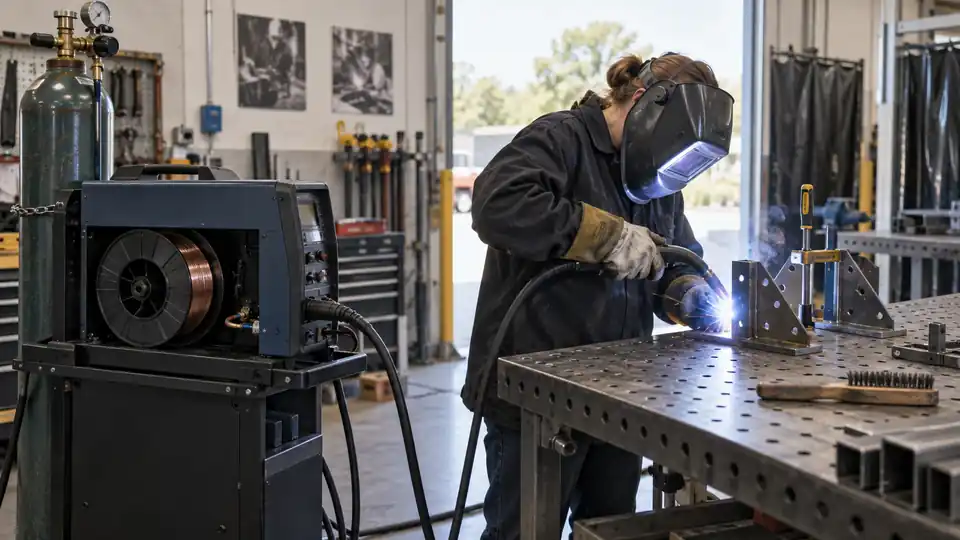
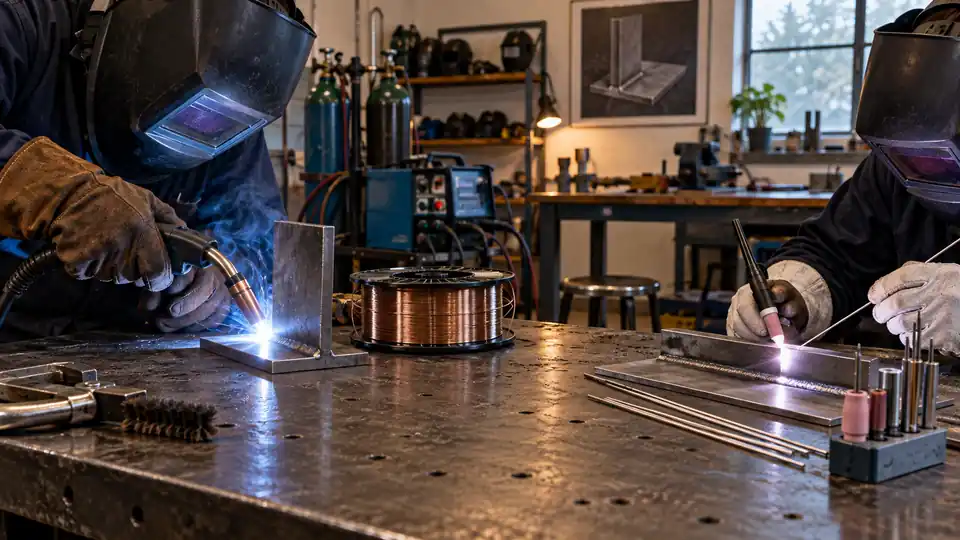
Best MIG Welder: 9 Picks in 2026
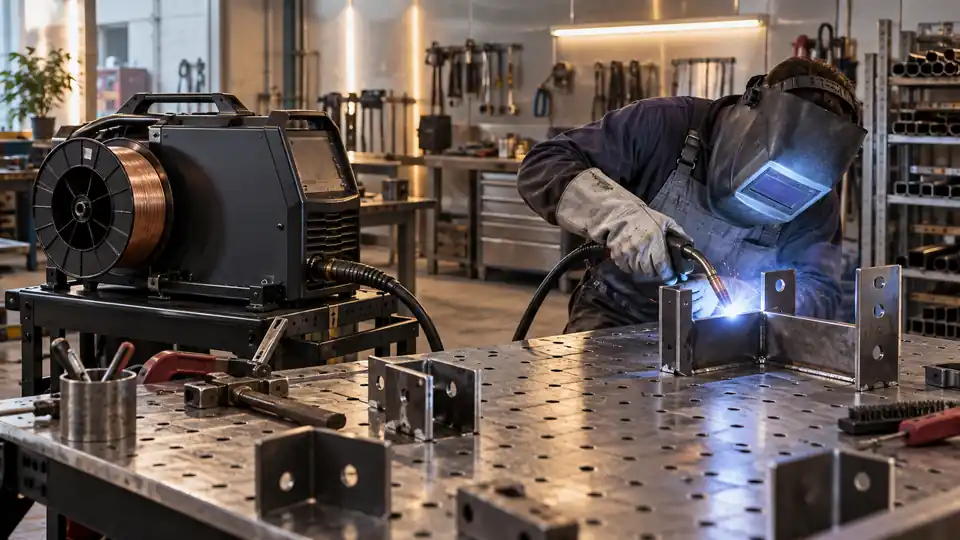
A good MIG welder has to match the metal, power available, wire system, and kind of work you actually plan to do. A compact 110V flux-core machine may be the right tool for occasional repairs, while a dual-voltage unit with gas MIG, manual controls, and spool-gun support makes more sense for a workshop handling steel, stainless, and aluminum. The highest… Continue reading Best MIG Welder: 9 Picks in 2026
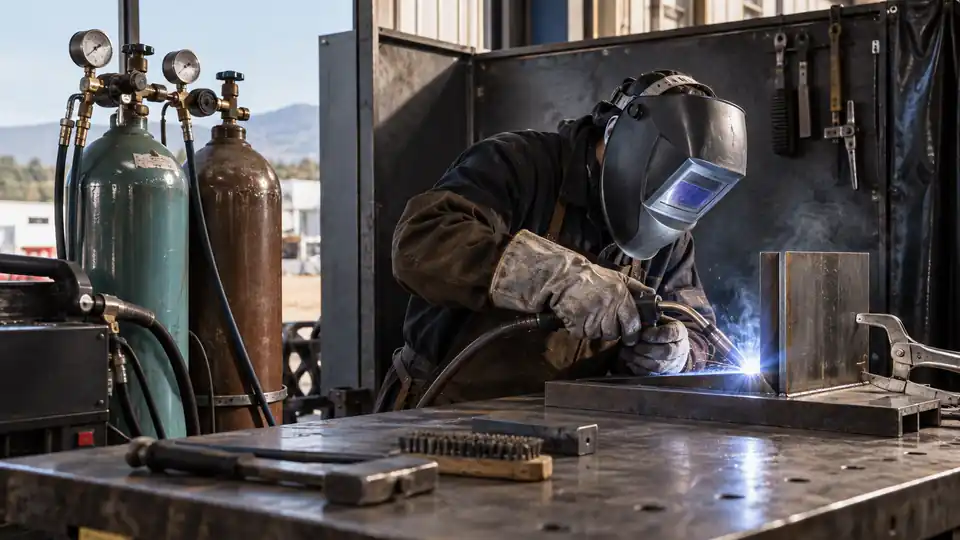
Best 110V Flux Core Welder: 9 Picks in 2026

A 110V flux-core welder earns its place in a garage, trailer, farm shed, or roadside repair kit because it can run from a common household-style circuit and weld without a shielding-gas cylinder. That combination keeps setup simple, especially for outdoor work where wind can disturb gas coverage. The important comparison is not peak amperage alone. Wire diameter, low-end control, feed… Continue reading Best 110V Flux Core Welder: 9 Picks in 2026

Best Flux Core Welder for Beginners: 9 Picks in 2026

A first flux-core welder can make a small repair feel surprisingly complicated. Wire diameter, polarity, voltage, wire speed, shielding gas, and material thickness all appear on the same page, while a large amperage number can make a compact machine seem more capable than it may be in practice. For beginners, the better choice is usually a welder that simplifies setup,… Continue reading Best Flux Core Welder for Beginners: 9 Picks in 2026

What Is Flux Core Welding?

If you are asking what is flux core welding, the short answer is that it is an arc welding process that feeds a hollow, continuously supplied wire filled with flux. The electric arc melts the wire and base metal, while the flux creates shielding gases and a protective slag layer over the cooling weld. This lets the process work without… Continue reading What Is Flux Core Welding?

How to Choose a MIG Welder

Learning how to choose a MIG welder gets much easier once the decision is tied to real work. A small machine for thin sheet and occasional repairs has different demands than a shop welder expected to run long beads on thick plate. Start with the material, thickness, available electrical supply, and welding environment, then use the machine’s specifications to confirm… Continue reading How to Choose a MIG Welder

Best MIG Welder Under $300: 9 Picks in 2026

A compact MIG welder can turn a bare garage corner into a useful repair station, but staying under $300 means choosing carefully. The machines in this range may support gas MIG, gasless flux-core welding, Stick, or Lift TIG, yet their output, wire handling, power requirements, and included equipment can differ sharply. A welder that suits thin sheet metal on a… Continue reading Best MIG Welder Under $300: 9 Picks in 2026

MIG vs TIG Welding

Choosing between MIG vs TIG welding usually comes down to a trade-off between speed and control. MIG uses a continuously fed wire electrode, so it can fill a joint quickly and keep a fabrication job moving. TIG uses a nonconsumable tungsten electrode and a separate filler rod when needed, giving the welder finer control over heat, puddle size, and bead… Continue reading MIG vs TIG Welding

What Is MIG Welding?

A steady hiss, a bright blue arc, and a thin bead of molten metal moving across the joint. MIG welding is a wire-fed arc welding process that joins metal with a continuously supplied consumable wire electrode and a shielding gas. The wire melts into the joint as the arc creates heat, while the gas helps protect the molten weld pool… Continue reading What Is MIG Welding?

Best MIG Welder for Aluminum: 9 Picks in 2026

Aluminum changes the MIG welding equation. The metal conducts heat quickly, forms an oxide layer that requires careful preparation, and often benefits from a spool gun or a short, well-supported wire path. That means a machine advertised with a high amperage number is not automatically a strong aluminum choice. Wire compatibility, spool-gun support, pulse control, input voltage, and the difference… Continue reading Best MIG Welder for Aluminum: 9 Picks in 2026