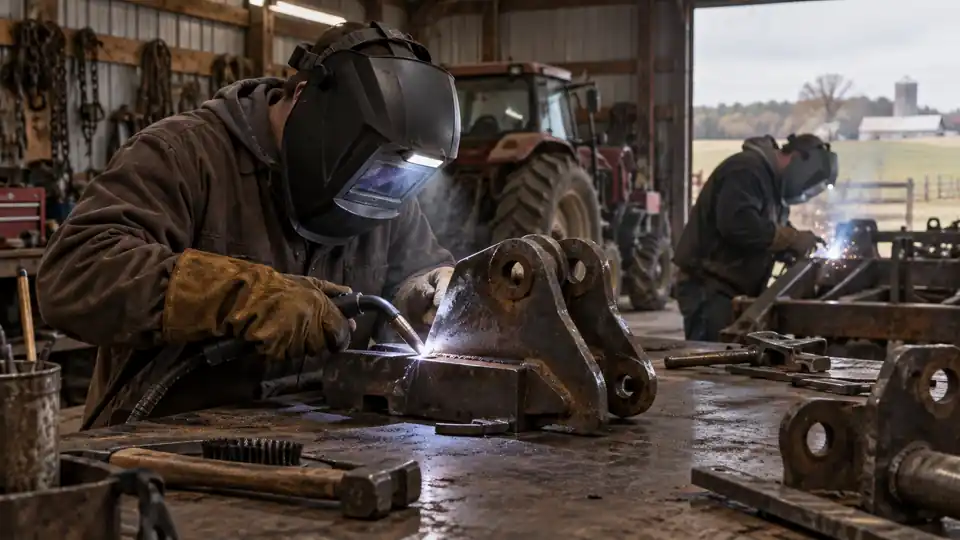
A welding helmet with a built-in light solves a familiar workshop problem. The arc may be bright enough to trigger the filter, while the surrounding joint, clamp, or workpiece remains buried in murky shadow. A small work light can make alignment and setup easier, especially inside a vehicle chassis, beneath a bench, or in a dim fabrication area. The better models in this category combine useful illumination with a dependable auto-darkening lens, a clear viewing area, and controls that do not become a headache halfway through a project.
The light itself should not be the only deciding factor. Buyers can easily focus on brightness and overlook lens coverage, optical clarity, sensor placement, battery design, and whether the light is separately powered. A large viewing window may help with joint awareness, while rechargeable power is more convenient for frequent work than a small coin cell. Some helmets also add fans, internal displays, memory settings, or side lenses, but extra controls can bring more weight and complexity. The ARCCAPTAIN Intelligent model offers the strongest overall balance here, while ANDELI’s panoramic helmets are better suited to buyers who place a premium on peripheral visibility.
This comparison weighs the lighting system alongside the parts that affect real welding use, including viewing area, auto-darkening response, sensor count, power source, fit, and grind or cut modes. The products are listed by their documented strengths, with duplicate-looking configurations kept separate only where their individual listings provide a distinct buying option.
Quick Answer
- Best Overall: ARCCAPTAIN Intelligent Auto-Darkening Welding Helmet for its wide lens, internal controls, adaptive shade, memory modes, and rechargeable work light.
- Best Panoramic View: ANDELI Smart Auto-Adjust Welding Helmet for its three-sided auto-darkening design and seven arc sensors.
- Best Budget Option: ARCCAPTAIN Large-View Welding Helmet for a large 3.94 by 3.66-inch lens, two-level LED lighting, and a low weight.
- Best for Fog-Prone Work: YESWELDER Welding Helmet with Rechargeable Fan and Work Light for its integrated fan and separate work light.
Best Welding Helmet With Light Comparison Table
| Product | Best For | Viewing Area | Light And Power |
|---|---|---|---|
| ARCCAPTAIN Intelligent Auto-Darkening | Best overall balance | 4.6 x 3.2 inches | Rechargeable work light, dual batteries, solar assist |
| ANDELI Smart Auto-Adjust | Maximum peripheral coverage | 7.2 x 3.2 inches total | Two LEDs, rechargeable battery, solar assist |
| ANDELI Four-Light Panoramic | Wide view with rechargeable lighting | 3.94 x 3.74 inches plus side view | Four LEDs, Type-C rechargeable battery |
| ANDELI Two-Light Internal Display | Balanced mid-range features | Large main lens plus side view | Two LEDs, rechargeable battery, Type-C charging |
| YESWELDER Fan And Work Light | Confined or fog-prone spaces | 3.93 x 3.66 inches | Rechargeable fan, LED work light, solar-assisted battery |
| ANDELI Four-Light Lightweight | Longer sessions and broad visibility | 3.94 x 3.74 inches plus side view | Four LEDs, rechargeable battery |
| ARCCAPTAIN Large-View Helmet | Budget-conscious buyers | 3.94 x 3.66 inches | USB-powered LED, solar and CR2450 battery |
| ARCCAPTAIN Large-View Variant | Simple lighted setup | 3.94 x 3.66 inches | USB-powered LED, solar and CR2450 battery |
| ANDELI Four-Light Variant | Wide view with motion lighting | 3.94 x 3.74 inches plus side view | Four LEDs, rechargeable battery |
The detailed reviews explain where the products overlap, where they differ, and which trade-offs matter before ordering.
1. ARCCAPTAIN Intelligent Auto-Darkening Welding Helmet: Best Overall

The ARCCAPTAIN Intelligent model earns the top position because its lighting system is part of a broader, well-balanced control package. The 4.6 by 3.2-inch viewing lens is larger in width than the standard 3.94 by 3.66-inch screens used by several lower-cost alternatives, while the listing identifies 1/1/1/1 optical clarity and five arc sensors. That combination should give buyers a broad, clear view of the joint without relying solely on the work light to improve visibility.
Its built-in display lets the wearer adjust shade, sensitivity, and delay from inside the helmet, and nine memory settings can save frequently used configurations. The work light flips open from the top and has ambient-light and arc-detection modes. A separate 1500mAh battery powers the light, while two CR2450 batteries and solar assistance support the lens. That separation is useful because a depleted light battery does not necessarily mean the auto-darkening system uses the same power source.
Pros
- Large 4.6 by 3.2-inch viewing lens
- 1/1/1/1 optical clarity rating listed
- Five arc sensors and 1/30,000-second switching claim
- Rechargeable work light with two operating modes
- Nine memory settings for repeated welding tasks
Cons
- Auto shade adjustment is unavailable in Cut mode
- More controls and batteries add complexity compared with basic helmets
This helmet suits buyers who move between welding, grinding, and cutting and want more control than a simple shade dial provides. It is also a sensible option for dark work areas where a flip-open light can illuminate the joint before the arc starts. Buyers who prefer the widest possible peripheral view may still favor the ANDELI three-sided model, while those seeking a lighter, simpler purchase may prefer the ARCCAPTAIN budget design.
To buy this product, click here.
2. ANDELI Smart Auto-Adjust Welding Helmet: Best Panoramic View

Peripheral visibility is the reason to choose this ANDELI. Its listed total viewing area measures 7.2 by 3.2 inches, combining a 4.6 by 3.2-inch main lens with two 1.3 by 2.5-inch side lenses. Unlike fixed side windows, all three lenses are described as auto-darkening. That matters for users who frequently work at awkward angles, where turning the head can be less convenient than having more of the surrounding joint visible.
The digital filter adds automatic adjustment for shade, delay, and sensitivity, with manual fine-tuning and four operating modes for welding, grinding, cutting, and lock. Seven arc sensors are listed, along with a 1/30,000-second switching claim. Two motion-activated LEDs provide two brightness levels, while the main battery and separate light battery help keep illumination from drawing on the lens power source. The feature list is extensive, so buyers should expect a more involved setup than with a basic fixed-control helmet.
Pros
- Three-sided auto-darkening lens arrangement
- Seven arc sensors provide broad detection coverage
- Digital controls for shade, sensitivity, and delay
- Nine memory presets for recurring tasks
- Motion-activated two-level LED lighting
Cons
- More expensive and more complex than the basic lighted helmets
- Side lenses increase the number of surfaces that must be kept clean and protected
This model makes sense for work that demands awareness of the joint and nearby parts, especially positions where a conventional front-only lens feels restrictive. The broad view is its central advantage, not simply the presence of two LEDs. Buyers who mostly weld from a fixed position and want fewer electronic adjustments may find the ARCCAPTAIN Intelligent helmet easier to live with.
To buy this product, click here.
3. ANDELI Auto-Darkening Welding Helmet With Light: Best for Bright Work Lighting

Four LEDs rated by the listing at up to 400 lumens give this ANDELI a stronger illumination focus than the two-light options. The lamps are intended to reduce shadows around the work area, which may help while positioning a torch or inspecting a joint before striking an arc. Its main viewing area measures 3.94 by 3.74 inches, and the helmet adds side-view panels listed at DIN 4 rather than full auto-darkening side lenses.
The lens uses six sensors, a 1/30,000-second switching claim, and 1/1/1/2 optical clarity. That last classification is slightly different from the 1/1/1/1 rating listed for several competing models, so buyers who place heavy emphasis on optical uniformity should keep the distinction in mind. A 2400mAh rechargeable battery, Type-C charging, and a battery indicator are practical additions for longer sessions, while interference suppression is intended to reduce false triggers from ambient light.
Pros
- Four LED lights with a listed output of up to 400 lumens
- Six arc sensors and rapid switching specification
- Type-C charging and rechargeable 2400mAh battery
- Wide main lens with additional side-view windows
- Built-in battery indicator
Cons
- Side-view panels are listed as DIN 4 and are not auto-darkening
- Optical classification is listed as 1/1/1/2 rather than 1/1/1/1
This version is a strong fit for dim spaces where light output matters more than a highly configurable digital interface. It offers more illumination than the two-LED ANDELI while retaining a large front lens and rechargeable power. Buyers who want true auto-darkening side lenses should move up to the ANDELI Smart model, while buyers who want the clearest listed optical rating may prefer the YESWELDER or ARCCAPTAIN designs.
To buy this product, click here.
4. ANDELI Two-Light Internal Display Helmet: Best Mid-Range Feature Set

The two-light ANDELI takes a more restrained approach than the four-light versions. Its LEDs are listed at up to 400 lumens and include motion-sensor operation, so the wearer can switch the illumination without reaching across the helmet with dirty gloves. That small convenience may matter in a repair area where the light is useful during setup, then unnecessary once the arc provides its own glare.
Six arc sensors and a listed 1/30,000-second switching time put the lens specifications close to the other ANDELI models. The helmet uses a true-color view with a 1/1/1/2 optical classification and includes a cloth bag, outside lens, and inside lens according to the product information. Its rechargeable battery uses Type-C charging and includes a battery indicator. The listing gives a large front lens and side-view area, but the side panels are not described as auto-darkening in the supplied details.
Pros
- Two motion-activated LED lights
- Six arc sensors and adjustable lens controls
- Rechargeable battery with Type-C charging
- Battery indicator helps track remaining power
- Replacement outside and inside lenses are listed in the package
Cons
- Side-view windows are not identified as auto-darkening
- 1/1/1/2 optical classification is below the 1/1/1/1 rating listed for some alternatives
This is a reasonable middle ground for buyers who want rechargeable lighting and internal controls without moving to the more elaborate three-sided digital model. The included replacement lenses are useful for maintenance, though buyers should verify the exact package contents on the current listing. Compared with the four-light ANDELI, it gives up some illumination, but the two-light layout may be sufficient for ordinary bench work and keeps the front design less crowded.
To buy this product, click here.
5. YESWELDER Welding Helmet With Rechargeable Fan And Work Light: Best for Confined Spaces

The YESWELDER stands apart by pairing its work light with a rechargeable fan. The listing describes the fan as a way to reduce lens fogging, while the LED is intended for dark or confined areas such as an automotive chassis. That combination targets a different nuisance than a brighter lamp alone. If warm air and restricted access regularly cloud the lens, airflow may be more useful than extra brightness.
The helmet offers dedicated modes for grinding at DIN 3, cutting at DIN 5 to 9, and welding at DIN 9 to 13. Its 3.93 by 3.66-inch viewing area, four sensors, and listed 1/30,000-second switching time are comparable to the budget ARCCAPTAIN configuration, but the YESWELDER adds a blue-light-filtering outer lens and 1/1/1/1 optical clarity. The listing also advises tightening the headgear and adjusting sensitivity and delay for low-amperage work, a reminder that sensor controls still matter when the arc is small.
Pros
- Rechargeable fan intended to reduce lens fogging
- Integrated LED work light for dark or confined areas
- Dedicated welding, cutting, and grinding modes
- 1/1/1/1 optical clarity and True Color view listed
- Solar-assisted CR2450 power system
Cons
- Fan and light add components that require charging and maintenance
- Low-amperage work requires careful sensitivity and delay adjustment
This is the better choice for intermittent repair work in tight spaces, especially where fogging and poor ambient light arrive together. It does not offer the panoramic side coverage of the ANDELI Smart, and its light system is less elaborate than the adaptive ARCCAPTAIN. Its value comes from solving two practical problems with one helmet rather than maximizing lens controls.
To buy this product, click here.
6. ANDELI Four-Light Lightweight Helmet: Best for Extended Wear

The listing identifies this ANDELI at approximately 1.32 pounds, which gives it a clear portability and wearability angle among the feature-heavy models. The helmet combines four motion-sensing LEDs with a 3.94 by 3.74-inch main viewing area and additional side-view panels. For a buyer who spends long periods moving between joints, the lower stated weight may matter as much as the light output.
Six arc sensors, a 1/1/1/1 optical clarity rating, and UV/IR protection listed up to DIN 16 form the core lens package. The product information does not identify the side windows as auto-darkening, so the panoramic effect should not be confused with the three-sided auto-darkening arrangement of the ANDELI Smart. The motion-sensing lamps can be switched without touching the helmet, but buyers should still check the current configuration for battery and charging details before ordering.
Pros
- Published weight of approximately 1.32 pounds
- Four motion-sensing LED lights
- 1/1/1/1 optical clarity listed
- Six arc sensors for detection from multiple angles
- Large front view with additional side windows
Cons
- Side windows are not identified as auto-darkening
- More detailed charging information should be confirmed for the current configuration
This model suits buyers who want broad visibility and four-light illumination without choosing the most complex helmet in the group. It is less compelling for users who need auto-darkening side lenses or who prefer a simple coin-cell design. Compared with the YESWELDER, it emphasizes visibility and weight rather than fog control.
To buy this product, click here.
7. ARCCAPTAIN Large-View Welding Helmet: Best Budget Option

A one-pound helmet with a 3.94 by 3.66-inch viewing area is a practical starting point for buyers who want built-in light without moving into the more expensive digital models. The ARCCAPTAIN uses a USB-powered LED module with two brightness levels. The light is supplied uninstalled, so fitting it to the helmet is part of the initial setup rather than an out-of-box detail to overlook.
The lens listing identifies four arc sensors, a 1/25,000-second switching claim, adjustable shade and sensitivity, and a dark range of 4/5 to 8/9 to 13. It also lists 1/1/1/1 optical clarity and True Color technology. Solar panels and a CR2450 battery power the filter, while the PP shell and padded adjustable headgear keep the design relatively light. This is a straightforward package, though it lacks the internal display, memory modes, and rechargeable work-light battery found on the higher-ranked helmets.
Pros
- Lightweight design at approximately one pound
- 3.94 by 3.66-inch viewing area
- 1/1/1/1 optical clarity listed
- Two brightness levels on the USB-powered LED
- Adjustable shade and sensitivity controls
Cons
- LED light requires installation before use
- CR2450 power is less convenient to recharge than the Type-C systems used by several alternatives
This helmet makes the most sense for occasional welding, basic repair, and buyers who want to keep weight and controls modest. It offers the core features needed for dark-area visibility, but the light is more of an assist lamp than a fully integrated smart lighting system. Buyers who weld for longer periods or switch among multiple saved settings may get more utility from the ARCCAPTAIN Intelligent or ANDELI rechargeable models.
To buy this product, click here.
8. ARCCAPTAIN Large-View Welding Helmet Variant: Best Simple Lighted Setup

This ARCCAPTAIN listing follows the same central design as the other large-view version, making it relevant for buyers who want a simple auto-darkening helmet with a top-mounted lamp. The 3.94 by 3.66-inch screen, four arc sensors, and listed 1/1/1/1 optical clarity give it the basic visibility package needed for MIG, Stick, TIG, grinding, and cutting according to the listing. The two-level USB light is useful for seeing the joint before the arc begins, but it is not a substitute for proper work-area lighting.
The filter uses solar assistance and a CR2450 battery, while the helmet weighs approximately one pound. Shade and sensitivity adjustments allow more control than a fixed-shade lens, and the listed dark range covers common welding and cutting settings. Since the supplied specifications match the other ARCCAPTAIN large-view versions closely, the main practical step is verifying the exact current listing, included light module, and replacement-lens compatibility before purchase.
Pros
- Large 3.94 by 3.66-inch front viewing area
- Four arc sensors and adjustable sensitivity
- Two-level USB-powered LED light
- Low stated weight of approximately one pound
- Solar and CR2450 filter power
Cons
- Light is listed as uninstalled
- Feature set is less advanced than helmets with internal displays or rechargeable lighting
This version is best for buyers who value a familiar, uncomplicated layout and need a light mainly for setup and occasional dark spots. It gives up the rechargeable convenience and memory controls found higher in the rankings. Before ordering, compare the current product page with other ARCCAPTAIN listings because the visible product names are highly similar and configurations can change.
To buy this product, click here.
9. ANDELI Four-Light Panoramic Variant: Best for Motion-Activated Lighting

This ANDELI configuration combines four LEDs with motion-sensor activation, a feature that can be handy when the wearer is holding a torch, workpiece, or clamp. The listing describes a 3.94 by 3.74-inch viewing area with additional side view and a 1/1/1/1 optical clarity rating. That gives it a stronger documented optical specification than the ANDELI models listed with 1/1/1/2, although the side panels are not identified as fully auto-darkening.
Six arc sensors are listed for the auto-darkening filter, along with UV/IR protection up to DIN 16 and a stated weight of approximately 1.32 pounds. The four-light system should be useful in a dark workshop, but it also adds another battery-dependent feature to monitor. Buyers who want the widest documented total viewing area should choose the ANDELI Smart, while those who mainly need a lamp and low complexity may find the ARCCAPTAIN easier to manage.
Pros
- Four LED lights with motion-sensor activation
- 1/1/1/1 optical clarity listed
- Six arc sensors and adjustable auto-darkening system
- Large main lens with additional side-view panels
- Published weight of approximately 1.32 pounds
Cons
- Side panels are not identified as auto-darkening
- Similar ANDELI configurations make exact listing verification important
This model is a reasonable choice for users who frequently move between dark and illuminated work areas and prefer hands-free light control. Its main distinction is the combination of four lamps and motion activation, rather than a radically different lens system. Check the current listing for the exact charging arrangement and replacement-lens details before ordering, particularly because several ANDELI helmets share similar names.
To buy this product, click here.
Buying Guide For The Best Welding Helmet With Light
Separate Work Lighting From Auto-Darkening
A helmet light illuminates the work area before or around the arc. It does not replace the auto-darkening filter, proper shade selection, or general workshop lighting. The ARCCAPTAIN models use a USB-powered LED module, while several ANDELI helmets use rechargeable LED systems and the YESWELDER pairs its light with a fan. Check whether the light is installed, separately powered, rechargeable, or dependent on the same battery as the lens.
Compare Lens Coverage, Not Just Screen Size
A large front window helps with joint visibility, but side coverage changes the experience in a different way. The ANDELI Smart lists three auto-darkening lenses, while several other helmets provide side-view panels without identifying them as auto-darkening. If work frequently involves angled positions, panoramic coverage may matter more than a small difference in front-window dimensions.
Understand Optical Classification
Optical classification describes how consistently the lens transmits the view through the filter. Several products here list 1/1/1/1 optical clarity, while some ANDELI models list 1/1/1/2. Buyers should avoid treating every “True Color” label as identical. The exact classification is more useful for comparison than a broad marketing phrase.
Look At Sensor Placement And Count
More sensors can provide broader arc-detection coverage, particularly when a helmet is used at an angle or one part of the lens is obstructed. The selected models list between four and seven sensors. Sensor count does not independently prove better performance, so sensitivity adjustment and the helmet’s documented operating modes remain relevant.
Choose The Power System For Your Routine
Solar-assisted coin-cell designs reduce charging tasks and suit occasional use. Type-C rechargeable systems are more convenient for frequent sessions, provided the helmet is charged before work begins. Some products separate the light battery from the auto-darkening battery, which can help prevent the lamp from consuming the filter’s available power.
Do Not Ignore Fit And Weight
A wide lens, side windows, batteries, and lamps can all add bulk. The listed weights range from approximately one pound for the ARCCAPTAIN large-view model to approximately 1.32 pounds for some ANDELI configurations. A lighter helmet may be easier to wear for repeated short tasks, while a more elaborate headgear system may distribute weight more effectively. Confirm the adjustment range and headgear design before ordering.
Check The Operating Modes
Grinding and cutting require different lens settings from welding. The YESWELDER lists dedicated grind, cut, and weld modes, while other helmets provide similar functions through controls or internal displays. A helmet that supports the work you actually do is more useful than one with a long feature list that does not match your process.
Best Welding Helmet With Light FAQ
Is A Welding Helmet With A Light Worth Using?
It can be useful in dark work areas, inside vehicle structures, beneath benches, or during joint setup before striking an arc. The light improves visibility around the workpiece, but it does not replace adequate shop lighting, correct lens settings, or the safety procedures specified by the manufacturer.
Does The Built-In Light Stay On During Welding?
That depends on the model. Some lights offer manual brightness controls, while the ARCCAPTAIN Intelligent listing describes ambient-light and arc-detection modes. Several ANDELI products use motion activation. Check the individual operating instructions because the light may turn off automatically once an arc is detected.
Are Side Windows Always Auto-Darkening?
No. Some helmets have side-view panels listed as DIN 4 or otherwise described without an auto-darkening specification. The ANDELI Smart model specifically lists three-sided auto-darkening, which is different from a helmet with fixed or separately shaded side windows.
Is A Rechargeable Helmet Better Than A Solar-Assisted Helmet?
Neither power design is automatically better for every user. Rechargeable helmets make frequent charging convenient, while solar-assisted coin-cell systems may be easier for occasional use because they do not require routine USB charging. A model with separate power for the work light can also reduce competition between illumination and lens operation.
What Does 1/1/1/1 Optical Clarity Mean?
It is a lens classification describing optical quality across several viewing characteristics. A 1/1/1/1 rating is generally a stronger documented optical specification than 1/1/1/2. Buyers should still compare the full lens design, viewing area, sensor arrangement, and controls rather than using one classification as the sole decision point.
Can These Helmets Be Used For Grinding And Cutting?
Several listings identify grind and cut modes, but the exact shade range differs. The YESWELDER lists DIN 3 for grinding and DIN 5 to 9 for cutting, while the ARCCAPTAIN large-view helmet lists adjustable ranges for welding, grinding, and cutting. Follow the product manual and select the mode intended for the task.
Do More Arc Sensors Guarantee A Better Helmet?
No. Sensor count may improve detection coverage, but it must be considered alongside sensor placement, sensitivity adjustment, switching behavior, lens quality, and fit. A four-sensor helmet can still be a sensible choice if its viewing area and controls match the application.
Should The Helmet Light Be Rechargeable?
Rechargeable lighting is convenient for frequent work and avoids replacing small batteries in the lamp. A USB-powered or coin-cell design may suit occasional users who prefer a simpler helmet. Check whether the light’s battery is separate from the auto-darkening filter and whether the light arrives installed.
Final Verdict
The ARCCAPTAIN Intelligent Auto-Darkening Welding Helmet is the strongest overall recommendation because it balances a large 4.6 by 3.2-inch viewing area, listed 1/1/1/1 optical clarity, adaptive shade controls, memory settings, and a rechargeable work light. Its separate lighting battery and dual operating modes give it a more complete feature set than the basic ARCCAPTAIN helmets, while the internal display provides more control than the simpler ANDELI designs. The trade-off is added electronic complexity.
Choose the ANDELI Smart Auto-Adjust model if side visibility is the priority, since its three auto-darkening lenses cover a wider field than the front-only designs. The YESWELDER is the better alternative for confined, fog-prone work because it combines a work light with a rechargeable fan. For a lower-cost, lighter setup, the ARCCAPTAIN Large-View helmet covers the essential ground with a large lens and two-level LED. Match the final choice to the work area, charging routine, lens coverage, and controls you will actually use.
