
Finding a welding helmet that works over prescription glasses can turn a simple setup into a frustrating puzzle. A tight nose bridge, shallow interior, or narrow viewing window may press against frames, while bulky goggles can fog or shift during a tack weld. The strongest options here either provide room for eyewear, use a goggle-style design, or accept a cheater lens that brings the puddle and joint edges into clearer focus.
Glasses compatibility involves more than checking whether a product is labeled “over glasses.” Interior clearance, headgear adjustment, lens shape, ventilation, and the way the product sits on the nose all affect usability. Auto-darkening goggles offer a compact fit for tight spaces, while a conventional helmet such as the YESWELDER LYG-M800H gives broader face coverage and documented compatibility with magnifying lenses. Different buyers will favor different trade-offs, but the YESWELDER offers the most balanced combination of viewing area, lens clarity, sensor coverage, and cheater-lens support.
This comparison weighs direct glasses-friendly welding goggles, conventional helmets with magnification support, and two replacement cheater lenses for buyers who already own a compatible hood. Product information comes from the supplied listings, so confirm current fit, lens standards, and accessory compatibility before ordering.
Quick Answer
- Best Overall: YESWELDER LYG-M800H for its large viewing area, four sensors, true-color optics, and stated cheater-lens compatibility.
- Best Digital Goggle: GEOSTAR Digital Auto-Darkening Welding Goggle for adjustable sensitivity, delay, and a broad shade range.
- Best Lightweight Goggle: T TOVIA Auto-Darkening Welding Goggles for its large nose bridge, adjustable strap, and listed 60-gram weight.
- Best Panoramic Option: Holiberty Panoramic Welding Glasses for side-window visibility and two wearing methods.
Best Welding Helmet for Glasses Comparison Table
| Product | Best For | Viewing And Fit Feature | Power And Shade Details |
|---|---|---|---|
| YESWELDER LYG-M800H | Overall glasses compatibility | 3.93 x 3.66 in view, cheater-lens compatible | CR2450 battery, DIN 3/5-9 and 9-13 |
| GEOSTAR Digital Goggle | Adjustable goggle controls | 4.37 x 1.65 in view, lightweight design | Replaceable batteries, DIN 4/5-9 and 9-13 |
| T TOVIA Welding Goggles | Lightweight over-glasses use | Large nose bridge, adjustable headband | Solar powered, DIN 3-11 |
| Holiberty Panoramic Glasses | Tight spaces and quick work | Expanded side windows, strap or legs | Solar powered, adjustable shade |
| TRQWH Auto-Darkening Goggles | Compact everyday setup | Lightweight PC and ABS frame | Solar powered, DIN 3-11 |
| AHBLQD Welding Goggles Kit | Goggle kit with replacements | Adjustable frame and elastic band | Solar powered, DIN 3-11 |
| ARCCAPTAIN Helmet With Light | Large view and dark work areas | 3.94 x 3.66 in view, 1-pound listing weight | CR2450 battery, DIN 4/5-8 and 9-13 |
| Multi-Diopter Cheater Lens Set | Trying several magnification levels | 2 x 4.25 in glass lenses | Five diopters from 1.0 to 3.0 |
| YESWELDER 2.0 Cheater Lens | Compatible YESWELDER helmets | 3.54 x 4.25 in lens size | 2.0 magnification, two-lens pack |
The detailed reviews below separate full helmets, compact auto-darkening goggles, and magnification inserts so you can match the solution to your frames, working position, and existing equipment.
1. YESWELDER LYG-M800H — Best Overall
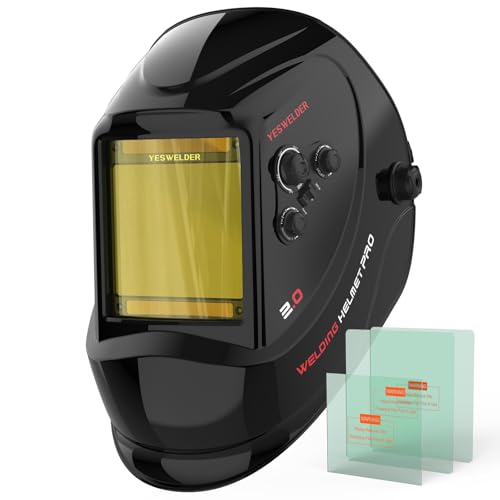
Prescription glasses users often need interior room more than an enormous list of processes, and the LYG-M800H addresses that need with a conventional helmet body and stated compatibility with magnifying lenses. Its 3.93 x 3.66-inch viewing area gives more room to see the joint, puddle, and nearby work than compact welding goggles, which can make positioning easier when frames already occupy space behind the lens.
The listing identifies 1/1/1/1 true-color optical clarity, four arc sensors, and a switching speed of 1/30,000 second. Those details matter because glasses wearers may already be managing reflections, frame edges, and a greater distance from the lens. The DIN 3/5-9 and 9-13 range covers light-state viewing, lower shade settings, and darker settings for a variety of listed welding and cutting tasks, while the accessible CR2450 battery keeps the power source familiar and replaceable.
Pros
- Large 3.93 x 3.66-inch viewing area gives more working visibility.
- Stated compatibility with magnifying cheater lenses.
- Four arc sensors provide broader detection coverage than simpler two-sensor designs.
- 1/1/1/1 true-color optical classification is listed.
- Adjustable shade range supports several common welding and cutting modes.
Cons
- A conventional helmet takes up more space than goggle-style eyewear.
- The CR2450 battery requires replacement over time.
This is the strongest starting point for someone who wears glasses regularly and wants full hood coverage with a clear path to magnification. It makes more sense than a compact goggle if prescription frames need breathing room or if a wider view matters during fabrication. Buyers who work in extremely tight spaces may prefer the T TOVIA or Holiberty designs, while those who already own a compatible helmet may spend less by adding a dedicated cheater lens.
To buy this product, click here.
2. GEOSTAR Digital Auto-Darkening Welding Goggle — Best Digital Goggle

The GEOSTAR takes the compact goggle approach and adds more adjustment than the simpler solar-powered options here. Its digital controls provide five sensitivity levels and five delay settings, giving the wearer more ability to tune the filter for ambient light and the transition after an arc stops. That flexibility can be useful for someone moving between darker shop corners, brighter outdoor areas, or different welding currents.
Its listed 4.37 x 1.65-inch viewing area is wide from side to side, although its vertical measurement is narrower than the YESWELDER helmet’s window. The product information lists a DIN 4/5-9 and 9-13 shade range, two sensors, replaceable batteries, and 1/1/1/1 optical classification. A fire-resistant hood, face shield, storage case, and four external protective plates are also listed, but buyers should confirm the current package contents and ensure the goggle shape leaves enough space for their particular frames.
Pros
- Five sensitivity and five delay settings allow detailed filter adjustment.
- Wide 4.37-inch horizontal viewing dimension.
- DIN 4/5-9 and 9-13 range covers several listed processes.
- Replaceable batteries support continued use without relying solely on solar charging.
- Listed 1/1/1/1 optical classification and permanent UV/IR protection.
Cons
- Two sensors provide less detection redundancy than the four-sensor helmets.
- The narrow 1.65-inch vertical dimension may feel restrictive for some positions.
Choose this model if you want goggle-sized coverage but prefer having more control over sensitivity and delay than basic auto-darkening glasses provide. It is especially interesting for users who shift between changing light conditions. The trade-off is a smaller vertical view and potentially tighter frame clearance than a standard hood, so measure your glasses and compare the goggle profile before ordering.
To buy this product, click here.
3. T TOVIA Auto-Darkening Welding Goggles — Best Lightweight Option

A pair of prescription glasses can make any head-mounted welding protection feel heavier and more crowded. T TOVIA addresses the weight issue directly, with the listing identifying a 60-gram weight for the goggles. The large nose bridge is intended for dual wear, while the removable legs and adjustable headband give two ways to secure the product around existing eyewear or headgear.
The filter is listed with a DIN 3 to 11 darkening range and solar power, so there is no routine battery replacement listed for this model. Adjustable frames and ventilation details are also highlighted in the product information. Ventilation may help reduce fogging from warm air and moisture, though it cannot guarantee clear lenses in every environment. The compact form suits tack welds, inspection, and positions where a full helmet may bump into surrounding surfaces.
Pros
- Listed 60-gram weight reduces the load on the nose and head.
- Large nose bridge is intended to accommodate glasses underneath.
- Adjustable headband provides an alternative to the removable temples.
- Solar-powered design avoids routine battery changes.
- DIN 3-11 range is suitable for the listed welding applications.
Cons
- Goggle-style coverage leaves less facial coverage than a conventional helmet.
- The listing does not provide a conventional helmet-sized viewing-area measurement.
This is a sensible choice for short welds, tight access, and users who dislike a heavy hood pressing against their frames. The low listed weight is its clearest advantage over the full helmets. It may be less suitable for extended work where broader face coverage, a larger vertical view, or a mounted cheater lens is more important than compactness.
To buy this product, click here.
4. Holiberty Panoramic Welding Glasses — Best Panoramic Option

Side visibility can be useful when a frame, fixture, or awkward body position makes a full hood feel boxed in. Holiberty’s welding glasses use expanded windows on both sides, creating a more open peripheral view than a simple front-facing goggle. The listing positions them for tight spaces, observation, quick tack welds, spot welding, gas welding, steel welding, and cutting.
The product can be worn with removable legs or an elastic strap, and the strap is also listed as suitable for use with hard hats. That dual setup may help a glasses wearer find a more stable arrangement, though the exact comfort will depend on frame width and face shape. The solar-powered auto-darkening lens returns to its light state after welding stops, while the integrated PC construction is described as impact resistant. Protective claims still need to be used alongside the manufacturer’s instructions and proper workplace procedures.
Pros
- Expanded side windows provide broader peripheral visibility.
- Removable legs and elastic strap offer two wearing methods.
- Solar-powered auto-darkening operation avoids listed battery changes.
- Compact shape suits tight work areas and quick tack welds.
- Product information identifies PC construction with heat and impact resistance.
Cons
- Side-window goggles provide less full-face coverage than a standard hood.
- The listing does not clearly state a formal optical classification.
Holiberty fits buyers who value a wide, open view and need to move between glasses and head protection arrangements. The strap is particularly relevant for anyone wearing a hard hat, while the side windows can make setup feel less enclosed. Choose a conventional helmet instead if you need a larger vertical viewing area, a cheater-lens slot, or more substantial face coverage around sparks and spatter.
To buy this product, click here.
5. TRQWH Auto-Darkening Welding Goggles — Best Compact Everyday Setup

TRQWH keeps the design straightforward: a compact PC and ABS goggle with solar power, auto-darkening, and a listed DIN 3 to 11 range. For someone who needs a small solution over glasses during occasional TIG, MIG, Stick, plasma-cutting, or grinding tasks, the reduced size can be easier to store and carry than a full hood. Its true-color lens is listed with a 1/1/1/2 optical classification.
The product information describes a broad field of view and fast movement from light to dark when an arc appears. It does not provide a detailed interior measurement, so glasses compatibility remains something to verify against the frame shape rather than assume from the product title. Buyers with narrow frames may find the design easier to fit, while larger frames may need the adjustable fit checked carefully before use.
Pros
- Compact goggle form is easy to store and transport.
- Solar-powered operation avoids listed battery replacement.
- DIN 3-11 shade range supports the listed welding and cutting tasks.
- True-color lens is listed with 1/1/1/2 optical classification.
- PC and ABS construction provides a lightweight alternative to a full hood.
Cons
- Interior clearance for larger prescription frames is not clearly specified.
- Its goggle shape provides less coverage than a full welding helmet.
This model suits occasional use where compact storage and simple solar operation matter. It ranks below the T TOVIA for documented glasses-oriented features because the listing does not clearly identify a large nose bridge, headband arrangement, or weight. Check the fit with your frames before committing, especially if your glasses have wide temples or thick side arms.
To buy this product, click here.
6. AHBLQD Auto-Darkening Welding Goggles Kit — Best Kit Configuration

The AHBLQD kit follows the same compact goggle concept as other solar-powered options, but its package adds five replaceable lenses, a pair of welding gloves, and an elastic band. That bundle is useful for someone assembling a basic setup and wanting spare lens pieces available for maintenance. The frame is adjustable, and the true-color filter is listed with 1/1/1/2 optical classification.
Its DIN 3 to 11 darkening range covers the levels identified for the product’s TIG, MIG, ARC, plasma-cutting, and grinding applications. The elastic band may be more practical than fixed temples for a user wearing prescription glasses or a hard hat, although the listing does not provide an internal width or precise nose-bridge measurement. The included gloves add convenience, but they should be evaluated separately for size, coverage, dexterity, and process suitability.
Pros
- Includes five replaceable lens pieces for maintenance or replacement.
- Elastic band allows a strap-based fit over existing eyewear.
- Adjustable frame can accommodate different head shapes.
- Solar-powered filter avoids listed battery replacement.
- Package includes gloves alongside the goggles.
Cons
- Exact glasses clearance is not clearly listed.
- DIN 3-11 is narrower than the range offered by some full helmets.
This package makes sense for a buyer who needs goggles, a strap, spare lens pieces, and gloves in one order. It is less compelling for someone who already owns suitable gloves or wants documented large-window dimensions. Treat the included accessories as a convenience rather than a reason to overlook the central fit question: your frames must sit securely without interfering with the goggle seal or view.
To buy this product, click here.
7. ARCCAPTAIN Auto-Darkening Helmet With Light — Best for Dark Work Areas

A full helmet can be easier to wear over glasses because it does not force prescription frames into a narrow goggle shell. ARCCAPTAIN adds a large 3.94 x 3.66-inch viewing area and a USB-powered LED light with two brightness levels. The light is listed as uninstalled, so attachment is part of setup, yet the feature may help illuminate joint edges when the surrounding work area is dim.
The lens uses four arc sensors and a listed 1/25,000-second switching speed, with sensitivity adjustment and DIN 4/5-8 and 9-13 dark-state settings. The listing identifies a 1/1/1/1 optical classification, two solar panels, and a CR2450 battery. At a listed one pound, it is lighter than many traditional hood designs on paper, although glasses clearance still depends on the interior shape and headgear adjustment.
Pros
- Large 3.94 x 3.66-inch viewing area gives broad joint visibility.
- USB-powered LED light adds illumination in dark work areas.
- Four arc sensors provide wide detection coverage.
- 1/1/1/1 optical classification and true-color viewing are listed.
- Listing identifies a one-pound weight and adjustable headgear.
Cons
- The LED light arrives uninstalled and requires separate setup.
- The product information does not clearly state cheater-lens compatibility.
ARCCAPTAIN is a strong alternative to the YESWELDER for someone who values a large view and added task lighting. It may suit a dim garage, enclosed repair area, or workbench where the joint is difficult to see before the arc starts. Glasses wearers who need magnification should favor the YESWELDER unless current documentation confirms that a suitable insert fits this helmet.
To buy this product, click here.
8. Multi-Diopter Welding Cheater Lens Set — Best for Trying Magnification Levels

Some glasses wearers already own a functional helmet but struggle to focus on the arc, tungsten, or small joint details through the main filter. This five-piece cheater lens set offers diopters of 1.0, 1.5, 2.0, 2.5, and 3.0, allowing the user to compare magnification levels rather than committing to a single insert immediately. The lenses measure approximately 2 x 4.25 inches, a common size for compatible helmet windows.
The lenses are made from glass and are intended to magnify the operator’s view of the arc and molten pool. That can help with close-up work, but fit is the controlling issue. A lens must sit securely in the helmet’s insert channel, remain clear of the auto-darkening cassette, and leave enough room for the wearer’s prescription glasses. The product is an accessory for compatible helmets, so it does not replace a welding hood or the correct shade filter.
Pros
- Five diopter strengths make it easier to compare magnification levels.
- 2 x 4.25-inch format suits many compatible helmet inserts.
- Glass construction provides a clear magnifying surface.
- Can improve close-up visibility of the puddle and joint area.
- Useful as a replacement or spare lens set when compatibility is confirmed.
Cons
- Requires a compatible helmet insert and does not provide head protection.
- Glass lenses can add weight compared with lightweight plastic inserts.
This set is the most practical choice for someone who already owns a helmet and is unsure which magnification strength feels right. The range from 1.0 to 3.0 is more flexible than buying one fixed lens, but buyers should measure the helmet opening first. It will not solve a poor helmet fit or insufficient interior clearance around prescription frames.
To buy this product, click here.
9. YESWELDER 2.0 Cheater Lens — Best for Compatible YESWELDER Helmets
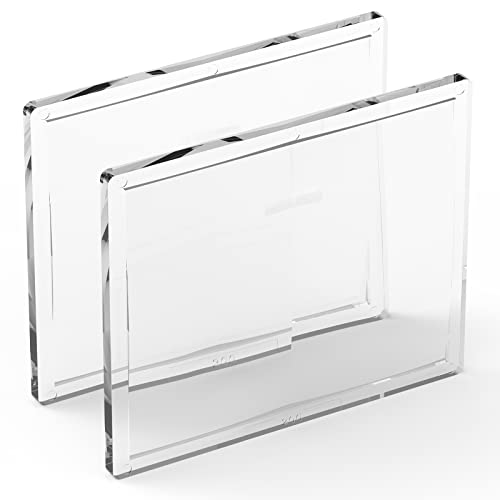
A fixed 2.0 cheater lens is a cleaner purchase than a multi-strength set if that magnification level already suits the wearer. This YESWELDER insert measures 3.54 x 4.25 inches and is listed as compatible with several YESWELDER helmet series, including the LYG-M800H selected above. The two-lens pack provides a spare, which is handy because external spatter and scratches can eventually interfere with a crisp view.
Compatibility is specific rather than universal. The listing names compatible Q800D, M800H, 17800F, 22800F, 30800H, M910D, and Q910D series, while excluding W700A, 900B, 1980GK, and 28800G series. That detail matters more than the 2.0 label itself. A strong magnification lens in the wrong channel is simply a poor fit, so confirm the exact helmet model and opening before ordering.
Pros
- 2.0 magnification supports close-up viewing of the work area.
- 3.54 x 4.25-inch size is intended for listed compatible helmets.
- Two lenses provide a spare or replacement.
- Lightweight construction is intended for extended wear.
- Compatibility is clearly identified for several YESWELDER series.
Cons
- Fixed 2.0 magnification offers less flexibility than the five-strength set.
- Explicitly excluded YESWELDER series cannot be treated as compatible.
This insert belongs on the shortlist for owners of a compatible YESWELDER helmet who want a straightforward magnification solution. It pairs especially naturally with the LYG-M800H because that helmet’s listing identifies cheater-lens compatibility. Skip it if your helmet model is outside the named series or if you still need to determine whether 2.0 magnification is comfortable for your working distance.
To buy this product, click here.
Buying Guide For The Best Welding Helmet For Glasses
Start With Interior Clearance
The first question is whether your prescription glasses can sit naturally inside the helmet or goggles without pressing against the lens cassette. Frame width, temple thickness, nose-pad shape, and the angle of the arms all affect the fit. A product can be labeled glasses-friendly and still feel cramped with large rectangular frames, so look for a large nose bridge, adjustable strap, or conventional hood interior where the listing provides those details.
Choose Between A Full Helmet And Welding Goggles
Welding goggles are compact and useful in tight spaces, but they cover less of the face than a standard hood. T TOVIA and Holiberty provide features aimed at dual wear, while the YESWELDER and ARCCAPTAIN offer larger helmet-style viewing areas. A full hood generally makes more sense for longer work or situations where broader face coverage matters. Goggles may be easier for quick tack welds, inspection, and awkward access.
Check The Viewing Area In Two Directions
A large horizontal measurement can create a broad side-to-side view, while vertical height affects how easily you see the top of the joint, torch, and puddle. The GEOSTAR lists a 4.37 x 1.65-inch area, which is wide but relatively short. The YESWELDER and ARCCAPTAIN list viewing areas close to 3.94 x 3.66 inches, giving a more conventional large-window shape.
Look For Cheater-Lens Compatibility
Prescription glasses correct your normal vision, but a cheater lens can bring close welding details into better focus inside the helmet. Compatibility is model-specific. The YESWELDER LYG-M800H is listed as compatible with magnifying lenses, and the separate YESWELDER 2.0 insert names several supported helmet series and several exclusions. Never assume a lens will fit because its dimensions appear close.
Understand Auto-Darkening Controls
Shade range controls how dark the lens becomes during different processes, while sensitivity controls how readily the filter reacts to an arc. Delay controls how long the lens remains dark after the arc stops. A goggle with sensitivity and delay adjustments, such as the GEOSTAR, offers more tuning than a basic solar-powered design. More controls can help in changing conditions, though a simpler setup may be easier to adjust quickly.
Compare Sensor Coverage And Power
Four sensors can provide broader detection coverage than two sensors when part of the lens is blocked by the work position, torch angle, or surrounding material. The YESWELDER and ARCCAPTAIN list four sensors, while the GEOSTAR lists two. Solar power can reduce routine battery changes, but battery-powered systems still need proper maintenance. Confirm the exact battery type and replacement procedure before relying on the helmet for regular work.
Inspect The Lens Classification And Product Documentation
Optical classification describes lens quality characteristics, but it should not be treated as a substitute for checking the complete product documentation. Several products here list 1/1/1/1 or 1/1/1/2 optical information, while others do not clearly provide a formal classification. Confirm the current markings, operating instructions, shade requirements, and any applicable safety information before use.
Best Welding Helmet For Glasses FAQ
Can I Wear Prescription Glasses Under A Welding Helmet?
Many conventional helmets can accommodate prescription glasses, but fit depends on the frame and helmet interior. Look for documented cheater-lens compatibility, a broad nose area, or a headband adjustment that does not press the temples of your glasses. Test the helmet with your actual frames before welding and confirm that the glasses do not interfere with the filter or headgear.
Are Welding Goggles Better Than A Full Helmet For Glasses?
Goggles can be easier to position in tight spaces and may weigh less, but they provide less facial coverage and usually have less interior room. T TOVIA lists a large nose bridge and adjustable headband, while Holiberty provides strap and temple options. A full helmet is generally the more suitable format for longer work or users who need a larger viewing area.
What Is A Cheater Lens?
A cheater lens is a magnifying insert placed inside a compatible welding helmet. It enlarges the close work area so the wearer can inspect the arc, joint, or puddle more easily. It does not replace prescription glasses, the helmet’s auto-darkening filter, or the shade required for the welding process.
Is A 2.0 Cheater Lens Suitable For Everyone?
No. Magnification preference depends on working distance, prescription, and the size of the details being viewed. The multi-diopter set offers strengths from 1.0 to 3.0 for comparison, while the YESWELDER insert uses a fixed 2.0 level. Start with a lens that matches your visual needs and verify that the insert fits your helmet.
Do Solar-Powered Welding Goggles Need Batteries?
The TRQWH, Holiberty, T TOVIA, and AHBLQD listings describe solar-powered operation without routine battery replacement. Other models, including the YESWELDER, ARCCAPTAIN, and GEOSTAR, list replaceable batteries or battery-assisted power. Follow the product instructions for storage, charging, and replacement rather than assuming all solar systems work identically.
Does A Large Viewing Area Guarantee Better Fit Over Glasses?
No. A large viewing window improves sightlines, but glasses compatibility also depends on interior depth, nose clearance, headgear pressure, and frame shape. The YESWELDER and ARCCAPTAIN have large listed windows, while the T TOVIA and Holiberty focus more on goggle-style fit features. Compare the entire design rather than the window measurement alone.
Can I Use A Welding Goggle For Every Welding Process?
Follow the exact shade range and instructions for the product and process. Several listings identify TIG, MIG, Stick or ARC, plasma cutting, and grinding as supported uses, but the listed shade range differs. A product advertised for multiple tasks does not remove the need to select the correct shade or follow workplace safety procedures.
Final Verdict
The YESWELDER LYG-M800H is the strongest overall choice for glasses wearers because it combines a conventional helmet format with a large 3.93 x 3.66-inch viewing area, four arc sensors, listed 1/1/1/1 optical clarity, and compatibility with magnifying lenses. Those features address the two problems that most often make glasses awkward under a hood: limited interior flexibility and difficulty seeing close joint details. Its replaceable CR2450 battery and larger form are reasonable trade-offs for the broader coverage.
The GEOSTAR is the better alternative for buyers who want digital sensitivity and delay controls in a goggle-style design. T TOVIA is the lighter compact option, while Holiberty offers useful side visibility and two wearing methods. If you already own a compatible helmet, the multi-diopter set gives more freedom to find a suitable magnification level, and the YESWELDER 2.0 insert is a focused choice for named YESWELDER series. Measure your frames, verify the helmet or insert model, and match the shade range to the work before placing an order.
