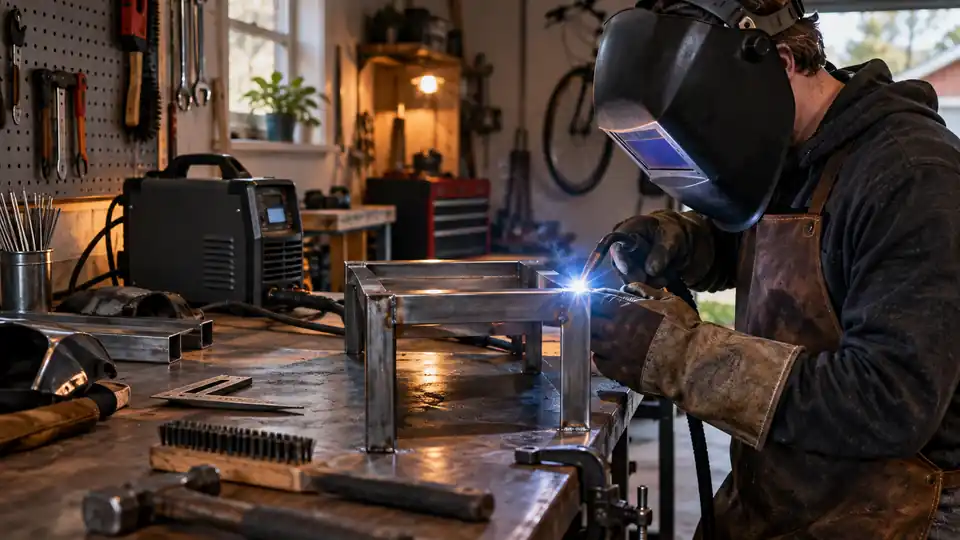
Home welding usually starts with a practical question: will the machine run from the power available in the garage, handle the metal you actually repair, and fit on a shelf when the project is finished? A 110V flux-core welder may be ideal for brackets and light repairs, while a dual-voltage multi-process machine makes more sense for buyers who expect to use MIG, Stick, and TIG over time. The headline amperage matters, but so do process support, control layout, included equipment, portability, and whether an advertised accessory must be purchased separately.
The products below cover several sensible home-workshop approaches. The YESWELDER MIG-205DS PRO is the strongest overall balance because it adds dual-voltage input, gas MIG, flux-core, Stick, Lift TIG, and spool-gun compatibility. Buyers who want a simpler machine may prefer the Lincoln Weld-Pak 90i FC, while those needing cutting capability may accept the larger investment and more complicated setup of the ARCCAPTAIN MIG205MP. Your available outlet, typical material, and interest in future welding processes should guide the final choice.
Quick Answer
- Best Overall: YESWELDER MIG-205DS PRO. Its dual-voltage input and five documented process modes give a home workshop room to grow.
- Best for Simple Home Repairs: Lincoln Electric Weld-Pak 90i FC. Two main controls and a protective metal case keep the setup straightforward.
- Best Budget Multi-Process Option: YESWELDER 135A 3-in-1. It runs from 110V power and combines gasless MIG, Stick, and Lift TIG support in a compact package.
- Best for a Home Garage With Cutting Needs: ARCCAPTAIN MIG205MP. It adds plasma cutting and broader controls, although its larger feature set requires more setup knowledge.
Best Welder for Home Use Comparison Table
| Product | Best For | Processes | Input Power | Key Feature |
|---|---|---|---|---|
| YESWELDER MIG-205DS PRO | Overall home workshop use | Gas MIG, flux-core MIG, spool-gun MIG, Lift TIG, Stick | 110V/220V | Synergic and manual MIG control |
| Lincoln Electric Weld-Pak 90i FC | Simple small repairs | Flux-core wire feed | 120V | Two-knob operation and metal case |
| YESWELDER 135A 3-in-1 | Budget-conscious beginners | Flux-core MIG, Lift TIG, Stick | 110V | Synergic control and 11.4-pound body |
| ARCCAPTAIN MIG165 | Dual-voltage home garages | Gas MIG, flux-core MIG, Lift TIG, Stick | 110V/220V | 60% rated duty cycle and 165A output |
| YESWELDER 160A MIG | Large-spool flexibility | Gas MIG, flux-core MIG, Lift TIG, Stick | 110V/220V | Supports 2-pound and 10-pound spools |
| ARCCAPTAIN MIG205MP | Garage welding and cutting | MIG, flux-core, HF/Lift TIG, Stick, plasma cutting, cleaning, spot welding | 120V/240V | Built-in plasma cutter and app control |
| YESWELDER 205A Stick | Portable Stick welding | Stick, Lift TIG | 110V/220V | Adjustable hot start and arc force |
| ARCCAPTAIN 200A Stick | Compact Stick and Lift TIG work | Stick, Lift TIG | 110V/220V | 7.2-pound chassis and synergic control |
| ARCCAPTAIN 135A Flux MIG | Lightweight gasless MIG work | Flux-core MIG, Lift TIG, Stick | 110V | 9.48-pound chassis and shoulder strap |
The detailed reviews explain where each machine fits, which specifications matter in a home setting, and where the advertised flexibility depends on optional equipment.
1. YESWELDER MIG-205DS PRO — Best Overall

A home machine earns the top spot by balancing useful capability with realistic workshop demands, and the MIG-205DS PRO has the broadest practical range in this selection. Its documented modes cover gas MIG, gasless flux-core MIG, spool-gun MIG, Lift TIG, and Stick welding. That gives a homeowner a path from basic steel repairs to projects that require shielding gas or a different arc process, although the Lift TIG torch and spool gun are additional purchases.
Dual-voltage input is especially useful in a home setting. A 110V outlet can handle convenient garage work, while 220V operation gives the machine access to a higher-voltage supply where one is available. Synergic MIG control can recommend settings based on wire-feed speed, and manual adjustment remains available for users who want more control over voltage and feed rate. The model is therefore more expandable than the simpler 110V machines without forcing every buyer into a single process.
Pros
- Supports gas MIG, flux-core MIG, Stick, and Lift TIG.
- Dual-voltage 110V/220V input suits different home electrical setups.
- Spool-gun MIG compatibility gives it a documented route toward aluminum work.
- Offers both synergic and manual MIG controls.
- Digital display and built-in protection functions support clearer setup.
Cons
- Lift TIG torch and spool gun are required separately for those modes.
- Its wider process range creates more setup decisions than a basic flux-core machine.
This is the strongest fit for a homeowner who wants one machine to cover several processes and may add equipment later. Buyers who only need occasional flux-core repairs could spend less and face fewer controls with the Lincoln or a compact 135A model. For a garage that may evolve from small repairs into more varied fabrication, the MIG-205DS PRO offers the most convincing balance among the nine options.
To buy this product, click here.
2. Lincoln Electric Weld-Pak 90i FC — Best for Simple Home Repairs

The Lincoln Weld-Pak 90i FC takes a narrower approach than the multi-process machines above. It is a 120V flux-core wire-feed welder with two primary controls for wire speed and voltage, so it avoids the process menus and accessory questions found on broader machines. For a homeowner repairing a small steel bracket, garden gate, or similar item, that simpler interface may matter more than a large advertised output figure.
Its 15-pound inverter body includes a shoulder strap and protective metal case, which gives it a practical advantage for storage and occasional transport. The manufacturer listing states that it can weld material up to 1/4 inch, but actual results depend on joint preparation, wire, settings, and operating conditions. This is a flux-core-only choice, so it does not offer the gas MIG, Stick, or TIG expansion available from most other picks here.
Pros
- Uses common 120V household-style input power.
- Simple two-control layout is easier to understand than a multi-process interface.
- Includes a protective metal case for storage and transport.
- Shoulder strap supports movement around a home workshop.
- Infinite voltage adjustment allows more tuning than fixed-step controls.
Cons
- Flux-core wire-feed operation provides less process flexibility than the multi-process picks.
- Its lower-output design is aimed at smaller jobs rather than sustained heavy fabrication.
Choose this model if straightforward operation and brand-specific support matter more than future expansion. A homeowner who later wants Stick welding, Lift TIG, or dual-voltage operation will need a different machine, while someone focused on compact repairs may appreciate the uncluttered design. The protective case also makes it a reasonable option for a machine that spends more time stored than running.
To buy this product, click here.
3. YESWELDER 135A 3-in-1 — Best Budget Multi-Process Option

For a small home garage, the YESWELDER 135A 3-in-1 keeps the core feature set useful without requiring a 220V circuit. It supports gasless flux-core MIG, Stick, and Lift TIG, although the Lift TIG torch is sold separately. The listing identifies a 135A output and a documented mild-steel thickness capability of up to 3/32 inch, which places it in the light-repair category rather than the heavy-fabrication class.
Synergic control automatically recommends voltage in relation to wire-feed speed, while a small voltage adjustment range provides some manual refinement. That combination can reduce the number of settings a new user must select at once. The 11.4-pound body and carrying handle also suit a homeowner who moves equipment between a garage bench, driveway, and storage shelf. Included flux-core wire helps reduce initial setup, but buyers should still verify the supplied accessories and consumable requirements for their specific project.
Pros
- Runs from 110V input power.
- Combines flux-core MIG, Stick, and Lift TIG support.
- Synergic control simplifies initial MIG setup.
- Compact 11.4-pound design is easier to move than larger machines.
- Listing includes .030-inch and .035-inch flux-core wire.
Cons
- Lift TIG requires an additional torch.
- Its documented thickness range is narrower than the higher-output dual-voltage models.
This machine suits buyers who want more than a single-process welder but have ordinary 110V power and modest repair plans. It makes less sense for someone who expects frequent long welds, needs gas MIG from the outset, or wants a documented route to aluminum through a spool gun. For light household projects and learning several basic processes, its compact format keeps the entry point relatively manageable.
To buy this product, click here.
4. ARCCAPTAIN MIG165 — Best for Dual-Voltage Home Garages

The ARCCAPTAIN MIG165 sits between the compact 110V machines and the more elaborate MIG205MP. It supports gas MIG, gasless flux-core MIG, Lift TIG, and MMA Stick, with a listed output up to 165A and 110V/220V input. That combination gives a homeowner flexibility to begin on a standard outlet and use a higher-voltage supply later, provided the electrical installation and operating instructions support it.
A listed 60% duty cycle gives this model a clearer documented operating figure than several budget options in the group, although duty cycle must always be read alongside the specified amperage and conditions. The machine accepts only a 2-pound spool of wire, which keeps the internal setup compact but limits how much wire can be loaded at once. The listing also identifies 2T and 4T functions, plus synergic and manual control modes, giving users more adjustment options than a basic flux-core unit.
Pros
- Supports both 110V and 220V input.
- Offers gas MIG, flux-core MIG, Lift TIG, and Stick modes.
- Lists a 60% rated duty cycle.
- Includes a large LED display and 2T/4T functions.
- Supplied package includes a MIG torch, ground clamp, electrode holder, and flux-core wire.
Cons
- Only accepts a 2-pound wire spool.
- Lift TIG torch must be purchased separately.
This model is a sensible middle path for a garage with access to more than one input voltage. It offers more headroom than the 130A and 135A machines while remaining lighter and less complicated than the plasma-cutter combination. Buyers who regularly use large wire spools or want aluminum MIG should look closely at the YESWELDER MIG-205DS PRO instead.
To buy this product, click here.
5. YESWELDER 160A MIG — Best for Large-Spool Flexibility

The YESWELDER 160A MIG is aimed at home users who want a four-process machine and more wire-storage flexibility than the compact ARCCAPTAIN MIG165. Its listing states compatibility with both 2-pound and 10-pound spools of .030-inch and .035-inch solid or flux-core wire. A larger spool can reduce interruptions during a longer project, although it may also add to the machine’s overall storage demands.
Gas MIG, flux-core MIG, Stick, and Lift TIG cover the processes most likely to interest a general home workshop. Synergic control can recommend voltage and wire-feed settings, while manual control remains available for users who want to tune the arc themselves. The 19.4-pound weight is considerably higher than the smallest picks, but the 110V/220V input gives it more placement flexibility than a 110V-only machine.
Pros
- Supports gas MIG, flux-core MIG, Stick, and Lift TIG.
- Accepts both 2-pound and 10-pound wire spools.
- Dual-voltage input suits different workshop power arrangements.
- Provides synergic and manual MIG control.
- Supports commonly listed 6010, 6011, 6013, and 7018 Stick electrodes.
Cons
- At 19.4 pounds, it is less convenient to carry than the compact models.
- Lift TIG torch is an additional purchase.
This machine fits a homeowner who expects recurring MIG or flux-core work and does not want to be restricted to a small spool. Its extra weight is easier to justify if the unit will live on a garage cart or bench rather than travel often. Buyers who value maximum portability should look toward the YESWELDER 135A or ARCCAPTAIN 200A Stick models.
To buy this product, click here.
6. ARCCAPTAIN MIG205MP — Best for a Garage With Cutting Needs

The MIG205MP is the broadest machine in this roundup, combining welding and plasma-cutting functions in one chassis. Its listed modes include gas MIG, gasless MIG, DC HF TIG, DC Lift TIG, Stick, cleaning, spot welding, and spool-gun aluminum MIG. It also lists a 120V/240V input, a 60% rated duty cycle, and plasma output from 20A to 50A. The cutting specifications distinguish a quality cut of 10mm from a maximum thickness of 18mm, which is more useful than presenting one vague thickness figure.
This feature range can appeal to a homeowner building a more capable garage setup, especially where a separate plasma cutter would take up additional bench space. App control and memory functions may help users save settings, while the machine also provides manual adjustments for MIG, TIG, and Stick modes. The trade-off is complexity. Torch selection, compressed-air requirements for plasma cutting, consumables, and the difference between HF and Lift TIG all require careful reading of the current manual before operation.
Pros
- Combines several welding modes with plasma cutting.
- Supports 120V and 240V input.
- Lists both DC HF TIG and DC Lift TIG capability.
- Provides a 60% rated duty cycle.
- App control and memory functions add configuration flexibility.
Cons
- Spool gun for aluminum MIG is required separately.
- Its broad feature set demands more setup knowledge and consumable planning.
Choose this product when cutting capability is a genuine home-workshop requirement rather than an attractive extra on a product page. It is a poor fit for someone who wants a compact, simple machine for occasional brackets, where the Lincoln or YESWELDER 135A is easier to rationalize. Buyers should verify included torches, air equipment, and current configuration details before ordering.
To buy this product, click here.
7. YESWELDER 205A Stick — Best Portable Stick Option

For home users who primarily want Stick welding, the YESWELDER 205A avoids the extra wire-feeder hardware found on the MIG machines. It supports 110V/220V input and lists compatibility with common 6010, 6011, 6013, and 7018 electrodes. Hot start, arc force, and anti-stick functions address three practical parts of Stick operation: starting the arc, maintaining it under changing conditions, and reducing electrode sticking.
At approximately 8.4 pounds, it is easier to carry and store than the multi-process machines. The digital display and adjustment knob keep the control scheme relatively direct, while the dual-voltage input gives it more flexibility than a 110V-only Stick unit. The listing also describes it as supporting Lift TIG, but buyers should confirm torch inclusion because the supplied package details do not establish that a TIG torch is included.
Pros
- Supports 110V and 220V input.
- Lists compatibility with common Stick electrode types.
- Includes adjustable hot start and arc force.
- Anti-stick function is documented.
- Lightweight 8.4-pound design is easy to store and transport.
Cons
- Does not provide MIG or flux-core wire-feed capability.
- Lift TIG support does not mean a TIG torch is included.
This is the right direction for a homeowner whose repairs favor Stick electrodes and outdoor flexibility over clean wire-feed operation. It gives up the quick-start convenience of synergic MIG, and users focused on thin sheet metal may prefer a MIG machine with finer wire-feed control. For brackets, equipment maintenance, and other projects suited to Stick welding, the compact chassis is a meaningful advantage.
To buy this product, click here.
8. ARCCAPTAIN 200A Stick Welder — Best Compact Stick and Lift TIG Option
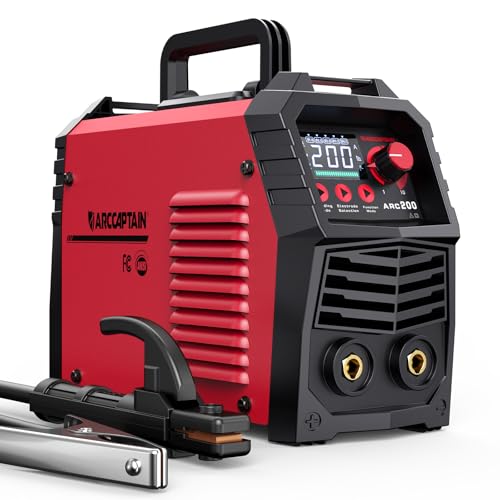
The ARCCAPTAIN 200A Stick Welder takes a similar process-first approach but adds synergic control based on selected electrode diameter. That can reduce initial setup work for a homeowner who is still learning how current, rod size, and arc behavior relate. It supports Stick and Lift TIG, with adjustable hot start and arc force, and its published electrode list includes 6010, 6011, 6013, and 7018 rods.
The 7.2-pound chassis is one of the lightest full-size-looking options in this group, making it practical for storage in a small utility area or transport to an outdoor repair. Dual-voltage operation is useful for a garage that may have more than one power option. Lift TIG is available, but the torch is not included, so the extra process should be treated as future capability rather than immediate out-of-box functionality.
Pros
- Supports Stick and Lift TIG modes.
- Dual-voltage 110V/220V input provides setup flexibility.
- Synergic control can match settings to electrode diameter.
- Adjustable hot start, arc force, and anti-stick functions are listed.
- 7.2-pound body is convenient for transport and storage.
Cons
- It does not support MIG or flux-core wire.
- Lift TIG torch is not included.
Buyers who want a small, dual-voltage Stick machine with a gentler setup curve may prefer this model over a basic current-only inverter. It is less suitable for users who want to weld thin sheet with wire-feed control or who expect one machine to cover gas MIG and flux-core work. Its appeal rests on focused Stick capability and portability rather than broad process coverage.
To buy this product, click here.
9. ARCCAPTAIN 135A Flux MIG — Best Lightweight Gasless MIG Option

The ARCCAPTAIN 135A Flux MIG is closely matched to the basic home-repair brief. It runs on 110V input, supports gasless flux-core MIG, Stick, and Lift TIG, and weighs 9.48 pounds. A carrying handle and shoulder strap make it easier to move than the heavier dual-voltage machines, which may matter when the welder must come down from a storage shelf for every project.
Its synergic control uses wire diameter and metal thickness to recommend wire-feed and voltage settings, while manual feed adjustment and a small voltage range remain available. The machine also lists 2T and 4T functions, plus adjustable hot start and arc force in Stick mode. The advertised arc-start and efficiency percentages should be treated as manufacturer claims rather than independent test results, but the underlying control features are relevant to home users who want simple setup with some room for adjustment.
Pros
- Supports flux-core MIG, Stick, and Lift TIG.
- 110V input suits a typical home workshop setup.
- 9.48-pound body is easy to move and store.
- Synergic settings simplify initial flux-core setup.
- Includes a large LED display and shoulder strap.
Cons
- Lift TIG torch must be purchased separately.
- Its 135A, 110V-only design offers less expansion than the dual-voltage models.
This model makes sense for a homeowner who values portability and gasless welding more than maximum output or process range. It is a close alternative to the YESWELDER 135A, so the final choice should rest on package contents, control preferences, and current listing details rather than the small amperage difference alone. Buyers planning larger projects or future gas MIG work should step up to a dual-voltage machine.
To buy this product, click here.
Buying Guide for a Welder for Home Use
Start With the Process, Not the Amperage Number
MIG and flux-core welding are often the easiest starting points for general home repairs because a wire-feed gun handles electrode delivery continuously. Flux-core wire can work without a shielding-gas cylinder, which simplifies outdoor use and storage, while gas MIG can provide a cleaner setup for suitable indoor work. Stick welding uses individual electrodes and has fewer wire-feed components, but it requires a different technique and may be less convenient on thin material.
TIG offers more control for careful work, but Lift TIG is not the same as AC TIG. None of the selected machines should be treated as an aluminum TIG machine unless AC capability is specifically documented. Similarly, a machine that supports spool-gun MIG may require the spool gun separately, so check the package before assuming aluminum welding is ready on day one.
Match Input Voltage to the Outlet
A 110V or 120V machine is easier to place in a typical home garage because it avoids the need for a higher-voltage circuit. That convenience comes with limits, especially as output demands and project duration rise. Dual-voltage machines such as the YESWELDER MIG-205DS PRO, ARCCAPTAIN MIG165, and YESWELDER 160A give homeowners more placement options, but dual-voltage input does not mean the machine produces identical output on both supplies.
Read the current manual for plug requirements, circuit capacity, voltage-switching procedure, and extension-cord guidance. The ARCCAPTAIN models specifically warn users to wait until the display and fan have stopped before changing voltage settings. A suitable outlet and correct connection are part of the purchase decision, not an afterthought.
Interpret Output and Duty Cycle Carefully
A larger maximum amperage can provide more headroom, but it does not automatically make a machine better for every home project. Thin sheet work may benefit more from controllable low settings and stable wire-feed adjustment than from the highest number on the front panel. Material preparation, joint design, wire or electrode choice, and operator technique also affect the result.
Duty cycle describes how long a machine can operate within specified conditions before cooling is required. The ARCCAPTAIN MIG165 and MIG205MP list a 60% rated duty cycle, but readers should check the amperage attached to that figure. Do not compare duty-cycle percentages without checking whether the ratings were measured at the same output and conditions.
Check What Is Included
Several machines in this roundup support Lift TIG, but the TIG torch is listed as an extra purchase. The YESWELDER MIG-205DS PRO supports spool-gun MIG, yet the spool gun is also separate. These details can change the real setup cost and determine whether a new machine can perform the intended process immediately.
Look for the included MIG gun, electrode holder, ground clamp, torch, wire roller, contact tips, regulator, and wire. A listing that says an accessory is compatible does not establish that it is in the box. Consumable sizes also matter. The ARCCAPTAIN MIG165 accepts a 2-pound spool, while the YESWELDER 160A listing states compatibility with both 2-pound and 10-pound spools.
Think About Portability and Storage
A welder that lives on a bench can justify a larger chassis and broader controls. A machine that must be carried through a house, lifted onto a shelf, or taken outside benefits from lower weight and a practical handle. The 3.3-pound Saker model was not selected for this final roundup because its narrow 20A to 120A Stick range offers less general home capability than the selected options, but it illustrates why the lightest machine is not automatically the strongest choice.
The same principle separates the 8.4-pound YESWELDER Stick machine from the 19.4-pound YESWELDER 160A MIG. One is easier to move and store, while the other accepts larger spools and covers more wire-feed processes. Choose based on where the welder will live and how often it must move.
Plan for Gas, Consumables, and Ventilation
Gasless flux-core welding reduces the need to store a shielding-gas cylinder, which can be convenient for outdoor repairs. Gas MIG and TIG require more equipment, including the appropriate cylinder, regulator, hose, and consumables. Follow the manufacturer’s instructions for polarity, wire type, electrode selection, gas setup, and machine connections.
Every welding process creates heat, light, fumes, and sparks. Use the appropriate helmet, clothing, gloves, eye protection, ventilation, and fire-control practices for the work area. Product features such as overheat protection do not replace the equipment manual, suitable training, or safe workshop procedures.
Best Welder for Home Use FAQ
Is a 110V welder enough for home repairs?
A 110V welder can be suitable for light repairs, small fabrication projects, and flux-core work, particularly when the machine’s documented output and material range match the project. It may provide less headroom than a dual-voltage model for larger or longer welds. Check the machine’s rated capability rather than assuming every 110V model performs the same.
Is MIG or Stick better for a home garage?
MIG or flux-core is often more convenient for users who want continuous wire feeding and straightforward control over small steel repairs. Stick can be useful for outdoor work and equipment maintenance because it avoids a wire spool and shielding-gas cylinder. The better choice depends on material, thickness, outdoor exposure, and the operator’s preferred process.
Can these welders weld aluminum?
Do not assume that generic MIG or TIG support means aluminum capability. The YESWELDER MIG-205DS PRO and ARCCAPTAIN MIG205MP list spool-gun aluminum MIG support, but the required spool gun is separate. The MIG205MP also lists DC TIG, which should not be confused with AC TIG for aluminum applications.
Does Lift TIG include a TIG torch?
Not automatically. Several products list Lift TIG as a supported mode while identifying the torch as an extra purchase or failing to list it among included accessories. Confirm the exact package for the ASIN you are buying before planning to use TIG immediately.
What does synergic MIG control do?
Synergic control links settings such as wire-feed speed, voltage, material thickness, or wire diameter to a recommended starting point. It can reduce the number of adjustments a beginner makes at once. Manual control remains useful when the recommended setting needs refinement for a particular joint or material.
Is a higher amp rating always better?
No. Higher output may help with thicker work, but a home user may value low-end control, wire-feed stability, portability, or a suitable duty cycle more. Compare the rated output with the intended material, process, input voltage, and operating pattern.
Should I choose a multi-process welder for occasional projects?
A multi-process machine is useful when you expect to switch between MIG, flux-core, Stick, and TIG or want room to expand later. It also adds controls, accessories, and setup decisions. For occasional small repairs, the Lincoln Weld-Pak 90i FC may be easier to store and operate than a large multi-process unit.
What should I verify before ordering a home welder?
Verify input voltage, supported processes, output range, duty-cycle conditions, wire or electrode compatibility, included accessories, and any optional torches or spool guns. Also check the current manual for circuit requirements and safe operating instructions. Similar model names can describe different packages, so match the specifications to the exact ASIN and configuration.
Final Verdict
The YESWELDER MIG-205DS PRO is the strongest overall choice for most home users in this selection because it combines 110V/220V input with gas MIG, flux-core MIG, Stick, Lift TIG, and spool-gun compatibility. Its accessories for Lift TIG and aluminum MIG are separate, but the documented expansion path is broader than the simpler 110V machines. That balance gives a homeowner useful capability now and more options later without moving immediately to the largest machine.
The Lincoln Weld-Pak 90i FC is the better fit for simple, occasional flux-core repairs and a straightforward control layout. The YESWELDER 135A is a sensible budget multi-process alternative for light work on 110V power, while the ARCCAPTAIN MIG205MP belongs on a shortlist only when plasma cutting and advanced process control justify the added complexity. Match the machine to the outlet, material, process, and accessories you are prepared to maintain, then verify the current manual before putting the first arc to work.
